Organizing Business Inventory After the Holiday Rush (Without Losing Your Mind or Your Space)
Rose Verdi
January 26th, 2026
The holidays are great for business—but not always so great for your storage space.
Once the rush is over, you’re often left with a mix of leftover seasonal stock, returned items, partially used displays, and shelves that feel like they survived a storm. January and February can either become months of confusion… or your biggest opportunity to reset, organize, and set your business up for a smoother year.
Whether you run a retail shop, an e-commerce business, a service company with extra equipment, or a seasonal operation, the weeks after the holidays are the perfect time to step back and ask:Is our inventory working for us—or are we working around our inventory?
With a bit of structure, some smart systems, and the right storage partner, you can turn that post-holiday chaos into a clean, efficient setup that gives you room to grow.
Step One: Take an Honest Look at Your Inventory
Before you can organize, you have to know what you’re organizing.The post-holiday period is the ideal time for a mini inventory audit. You don’t necessarily need a full-blown, close-the-doors-all-day count, but you do need clarity around:
- What sold quickly
- What barely moved
- What you over-ordered
- What you’ll absolutely use again next season
This is especially important if you brought in special seasonal products, displays, or promotional materials. Compare sales trends, talk with your team, and create three basic groups:
- Everyday stock – Items you sell or use year-round
- Seasonal stock – Holiday or time-specific inventory that will be relevant again
- Dead stock – Items that didn’t move, are outdated, or don’t fit your brand anymore
Everything else you do will build on this understanding.
Step Two: Stop Letting Your Sales Floor Double as a Storage Room
One of the most common post-holiday problems for businesses? The store, office, or warehouse starts doing double duty as a storage unit.
Back rooms get packed. Aisles feel tighter. Overflow boxes sneak into corners and under tables. It can:
- Make your space look cluttered and less professional
- Make it harder for staff to find what they need quickly
- Reduce room for new products or displays
- Create safety concerns with stacked boxes and tight walkways
If you’re nodding along, that’s a sign your business has outgrown its “in-house” storage capacity—and that self storage can become a strategic extension of your space.
Instead of forcing every box, banner, sign, and seasonal product to live in your main location, you can shift longer-term inventory and rarely used items into a nearby storage unit, freeing up the space you actually work in every day.
What Belongs in a Business Storage Unit After the Holidays?
Think of your storage unit as your off-site inventory room—organized, intentional, and designed to support daily operations, not hinder them.
Here’s what often makes the most sense to move off-site after the holiday rush:
1. Seasonal Inventory & Décor
- Holiday-specific products
- Gift sets, bundles, and packaging materials
- Artificial trees, garlands, lights, and window displays
- Seasonal signage and point-of-sale displays
You’ll absolutely want these items again next year—but they don’t need to eat up prime space in your store or office all year long.
2. Overstock & Bulk Purchases
If you buy in bulk to get better pricing, self storage can be a game-changer. Store bulk cases, extra boxes, and reserve stock off-site, and keep only what you need right now on your shelves or in your back room.
3. Event & Trade Show Materials
- Branded tents, tables, and backdrops
- Promo banners and signs
- Boxes of branded giveaways
These are crucial for your marketing but only used a few times a year. A storage unit keeps them safe, clean, and out of your way in the meantime.
4. Equipment and Tools
Service and project-based businesses often have seasonal equipment or tools that aren’t used every month. Instead of tripping over them in your shop or garage, you can store them securely and access them only when needed.
Make Your Storage Unit an Organized Extension of Your Business
Simply moving boxes from your shop into a unit isn’t enough. To really get the benefit, you want your storage unit to feel like a satellite location that’s easy for your team to use.
Here are some best practices to set it up right:
Create Zones Inside the Unit
Divide your unit into simple, clearly defined sections, such as:
- Seasonal Inventory – Holiday and time-specific items, all grouped together
- Bulk Stock – Extra cases or pallets that replenish your main location
- Marketing & Displays – Signage, props, stands, and event materials
- Archives & Records (if needed) – Longer-term storage for paperwork or records
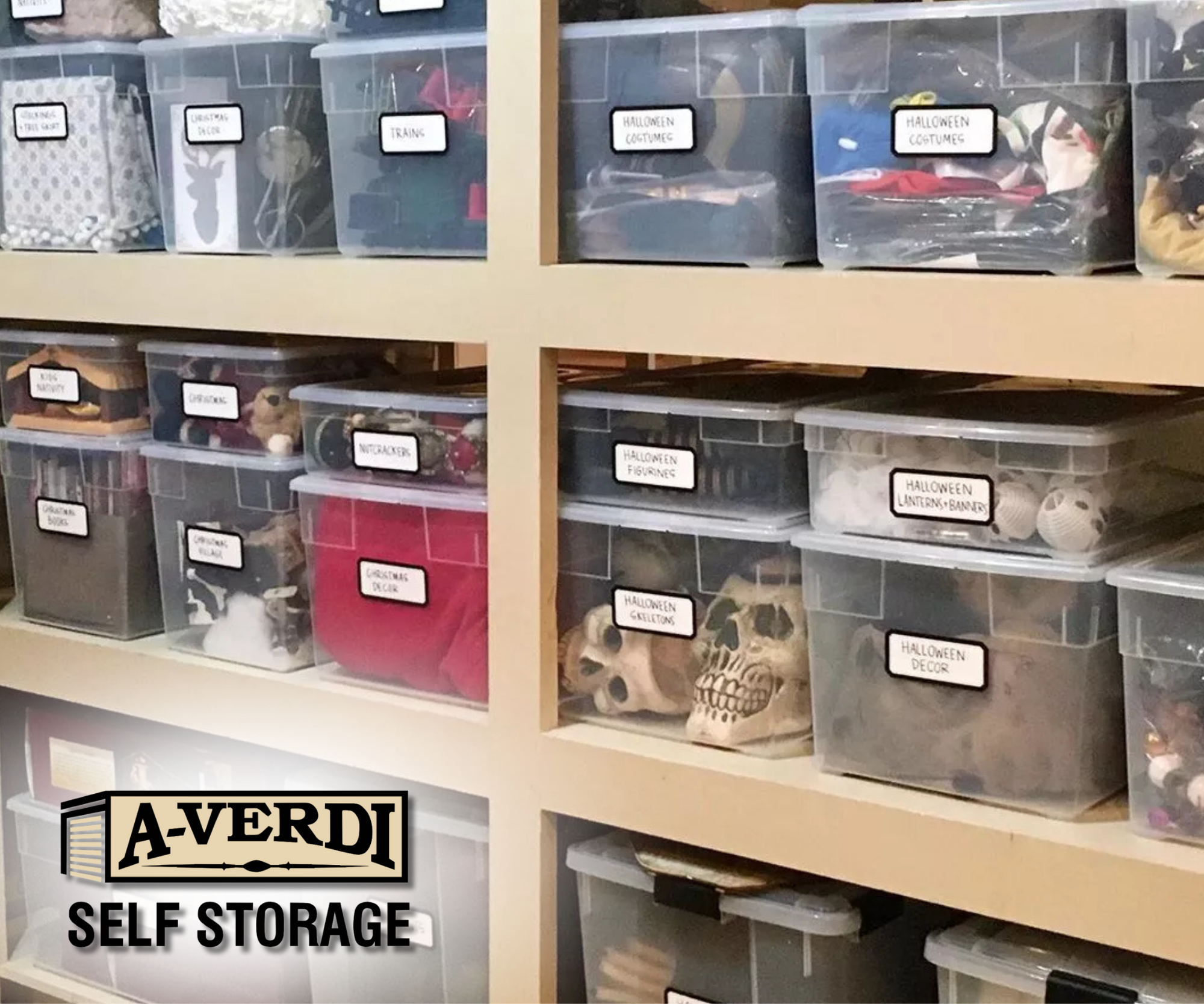
Even a few labeled rows of shelving can make a huge difference. When everything has a “home,” your staff will spend far less time searching and digging.
Label Like You Mean It
Vague labels like “Misc” or “Holiday Stuff” won’t help anyone next November.Instead, try labels such as:
- “Holiday 2025 – Ornaments & Lights”
- “Q4 Gift Boxes & Tissue Paper”
- “Trade Show Booth – Complete Kit”
- “Winter Apparel – Size Breakdowns”
Use large, easy-to-read labels on multiple sides of each box or tote. If you have a lot of inventory, it’s worth keeping a simple digital map or inventory list so new staff can understand the system quickly.
Store for Accessibility, Not Just Space
It’s tempting to cram in as much as possible—but future you will regret it if you block everything in.Instead:
- Keep seasonal items and frequently used stock near the front of the unit.
- Place rarely accessed items (like old displays or archival records) toward the back.
- Leave a walkway or central aisle so staff can access items safely.
Think of your storage unit like a mini-warehouse. Organization now saves time and frustration later.
How Smarter Inventory Storage Supports Your Bottom Line
It might seem like storage is just a cost—but used strategically, it can actually help you make and save money.
Less Clutter = Better Customer Experience
In a retail space, cluttered aisles and overstocked shelves can overwhelm customers. A cleaner, more open layout:
- Makes products easier to see and shop
- Helps your store feel more welcoming and professional
- Encourages longer browsing and more purchases
By shifting excess inventory and out-of-season items into storage, you give your sales floor room to breathe.
Better Visibility = Smarter Ordering
When you separate everyday stock from long-term or seasonal items and track what’s stored off-site, you gain a clearer picture of:
- What you truly have on hand
- Which items are worth reordering
- Which products you’re still working through from last season
That information can prevent over-ordering and help you make more strategic purchasing decisions.
Flexibility for Growth
Maybe you’re not ready to move into a larger retail or warehouse space yet—but you still need room to operate. A storage unit can be that middle step, giving you:
- Extra space immediately
- Flexibility to adjust your setup as your business grows
- A way to handle seasonal spikes without committing to a much larger lease
It’s a smart way to give your business breathing room without overextending.
How A-Verdi Self Storage Fits Into the Picture
As a local New York–based company, A-Verdi understands the ebb and flow of business seasons—especially how intense the holidays can be and how important the post-holiday reset is.When businesses choose us for inventory and equipment storage, they’re often looking for:
- Convenient locations so team members can quickly grab what they need
- Clean, secure units that keep products protected from the elements
- Flexible options as inventory shifts throughout the year
We know that behind every box is real work, real customers, and real revenue. That’s why we aim to be more than just extra space—we want to be part of the system that keeps your business running smoothly.
Make This the Year Your Inventory Works for You
The weeks after the holiday rush are a powerful reset button. Instead of simply pushing boxes into corners and hoping for the best, you have the chance to overhaul how your business handles inventory:
- Clear out what doesn’t serve you
- Create a clean, efficient workspace
- Move long-term and seasonal items into a well-organized storage unit
- Build systems that make it easy for your team to find what they need
Your shelves, your staff, and your future self will all thank you.If you’re ready to reclaim your space, streamline your inventory, and set your business up for a smoother year, self storage can be a key part of that strategy—and A-Verdi Self Storage is here to help you make it happen.